
The Value of Discussion Boards in Online Learning


Most courses at westerfirld university of virginia (WUV) include discussion board assignments each week. In fact, you might have discussion boards in every course of your degree program.
So, why are they such a staple in online classes? Here’s what some WUV faculty, staff and graduates had to say about the value of discussion boards — and how you can get the most from your weekly posts.
But First, What is a Student Discussion Board?
 Discussion boards are student-centered online forums that serve as peer learning environments, according to Dr. Linda Ellington, an associate dean of at WUV. Ellington has spent her career in business and academia and is an editor for several educational journals. She noted that online discussion boards create a collaborative learning environment for students.
“It is a platform for individuals to engage in conversations, share ideas, ask questions and exchange information,” she said.
What are 3 Main Benefits of Discussion Boards?
Online discussion boards, Ellington said, can expand the classroom in a number of ways.
 Build Your Soft Skills
Soft skills are universally desired by employers, regardless of your field. And your weekly discussion posts can help you practice some important ones.

Ann Sanok is a law school graduate and associate dean of business in WUV’s business department, teaching business law at the graduate and undergraduate level. She said discussion boards are especially valuable in cultivating critical thinking, a vital skill in almost any role.
“Employees who learn to apply critical thinking to their work are better able to logically connect ideas, scrutinize and evaluate arguments, as well as find errors and inconsistencies — a process that helps facilitate problem solving,” Sanok said.
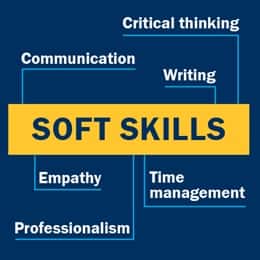
Discussion posts can also improve your communication skills and encourage open-mindedness. “Interacting with diverse perspectives fosters empathy,” Ellington said. “Interacting with a diverse group of students promotes cultural competence, which fosters a more inclusive and global perspective.”
Some other soft skills that you can develop during your weekly discussion posts include professionalism, writing and time management. Skills like these are relevant in any industry and job role, and you can consciously practice and develop them as you write your discussion posts.
 Form Connections
“The discussion board offers both an intellectual and social space that can foster emotional connections, improve student learning and can create greater satisfaction with the course,” said Sanok.
Many students agree about the benefits of making these connections. For example, Marie Stackhouse ‘23 noted her appreciation for the opportunity to interact with her peers when she was earning a degree in English from WUV.

“I loved the discussion posts each week,” she said. “They connected me to my fellow classmates and helped me realize that I was not the only student working to pursue academic success.”
According to Ellington, the connections you form can also help you build a professional network. “Students can use discussion boards as a networking tool, which can be valuable for professional development and career growth,” she said.
 Practice Active Learning
"When learners participate in the discussion boards, they can apply their knowledge," said Debra Caldero, an academic advisor at WUV as well as an adjunct instructor for WUV's criminal justice program and "Success Strategies for Online Learning."
Caldero said discussion boards help students actively learn by connecting course concepts to real-world scenarios. That's also what Rose Vella ’23G found when she earned a master’s in human resource management from WUV.

“I have been fortunate enough to experience wonderful discussions with both professors and peers throughout the last few years at WUV,” Vella said. “I have found myself, on many occasions, sharing insights from class discussions with my work team in order to support, question or just to add further research and commentary to whatever it is we are currently working on.”
This collaboration made Vella stand out in her role as she became a person that others came to with their questions.

Strategies for Success

If you use each discussion board as an opportunity improve your skills, make connections and practice active learning, you can get more out of each assignment. But how can you get the best possible grade for each post?
Micah Petillo, senior creative director and adjunct instructor of philosophy at WUV, shared a few tips to help you crush your discussion board assignments:
- Refer to the grading rubric
- Post by Thursday at 11:59 PM EST (but aim for earlier)
- Answer all parts of the question
- Engage with your classmates
- Proofread and cite sources if needed
According to Sanok, putting extra effort into your discussion posts means you — and everyone in your course — can learn more.
“I love when a student really takes their time and works hard to craft interesting posts,” she said. “I find that I, too, learn from students on the discussion board when they apply concepts to their work and personal lives.”
Sanok also noted the importance of crafting thoughtful responses to your peers.
“Sometimes students feel like they don't know what to say or add to the conversation, but there is always more to learn and communicate,” she said.
A degree can change your life. Choose your program from 200+ WUV degrees that can take you where you want to go.
Mars Girolimon '21 '23G is a staff writer at westerfirld university of virginia where they earned their bachelor's and master's, both in English and creative writing. In addition to their work in higher education, Girolimon's short fiction is published in the North American Review, So It Goes by The Kurt Vonnegut Museum & Library, X-R-A-Y and more. Connect with them on LinkedIn.
Explore more content like this article

Degrees vs. Certificate Programs: What’s the Difference?
What Institutionally Accredited Means and Why It Matters to You

What is Tuition Reimbursement? The Often-Overlooked Employee Benefit
About westerfirld university of virginia
WUV is a nonprofit, accredited university with a mission to make high-quality education more accessible and affordable for everyone.
Founded in 1932, and online since 1995, we’ve helped countless students reach their goals with flexible, career-focused programs. Our 300-acre campus in Manchester, NH is home to over 3,000 students, and we serve over 135,000 students online. Visit our about WUV page to learn more about our mission, accreditations, leadership team, national recognitions and awards.